
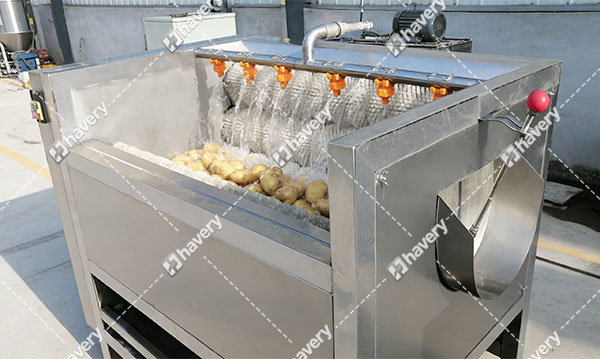
In the competitive landscape of food processing, efficiency is the cornerstone of profitability. Whether you are running a small-scale snack business or a large-scale frozen french fry plant, the potato washing and peeling machine is likely the heart of your preparation line. However, the most frequent question we encounter from global importers is: “What is the actual potato washing and peeling machine price, and why does it vary so much between suppliers?”
The potato washing and peeling machine price ranges from a few thousand dollars to tens of thousands of dollars mainly depands in the automation level. Besides it reflects significant differences in material quality, and technical configurations.
Influncing Potato Washing and Peeling Machine Price Key Factors
When comparing quotes for a potato washing and peeling machine, it is essential to look beyond the bottom line. From a professional manufacturing perspective, several “hidden” factors determine the cost and, more importantly, the Return on Investment (ROI) for your business.
1. Material Construction and Steel Grade
The foundation of any high-quality potato washing and peeling machine is its frame.
- SUS304 vs. SUS201: Top-tier machines use food-grade SUS304 stainless steel, which is resistant to corrosion from water and the acidic nature of potato starch. Machines made with SUS201 or carbon steel are cheaper initially but will rust within months, leading to food safety issues.
- Plate Thickness: A professional-grade potato washing and peeling machine usually features a plate thickness of 2.0mm to 3.0mm. Thinner plates lead to vibration and structural warping, which shortens the machine’s lifespan.
2. Brush Roller Quality and Material
Since we are focusing on the brush-type peeling method, the “rollers” are the most critical wear part.
- Nylon 66 Bristles: High-end rollers use PBT or Nylon 66, which offers excellent memory and wear resistance.
- Hard vs. Soft Brushes: The potato washing and peeling machine price may fluctuate based on the brush configuration. Harder brushes are required for deep peeling (old potatoes), while softer brushes are used for delicate washing (new potatoes or carrots). Customizing these rollers adds to the initial cost but ensures 98% peeling efficiency.
3. Processing Capacity and Motor Power
Size matters. A machine designed for 500kg/h will naturally cost less than a massive unit capable of 3,000kg/h.
- Motor Brands: Does the machine use a standard local motor or a globally recognized brand like Siemens or ABB? High-torque, waterproof motors (IP55 or higher) are essential in a wet environment, and they represent a significant portion of the potato washing and peeling machine price.
4. Technical Configuration and Automation
Modern potato washing and peeling machines are no longer just “spinning brushes.”
- VFD (Variable Frequency Drive): This allows you to adjust the rotation speed based on the potato variety, reducing waste.
- Automatic Discharge & Waste Collection: Integrated screw conveyors for waste disposal and automatic sensors for discharge gates increase the price but significantly reduce labor costs.
Investing in Durability
When you evaluate the potato washing and peeling machine price, consider the “Cost of Ownership.” A cheaper machine often requires frequent brush replacements, has higher electricity consumption, and results in a higher “peel loss” percentage. A professional potato washing and peeling machine is designed to minimize flesh loss while maximizing throughput, often paying for itself within 6 to 12 months through material savings alone.
Why the Brush-Type Machine is the Industry Standard
The brush roller potato washing and peeling machine is favored because it provides a “dual-action” solution. Unlike abrasive drum peelers that can be too aggressive, the brush rollers gently but firmly remove the skin while the high-pressure spray nozzles wash away dirt and debris simultaneously. This results in a smoother surface, which is crucial for the appearance of the final product, whether it be chips or frozen wedges.
Conclusion
Choosing the right equipment involves a delicate balance between your budget and your production goals. While the potato washing and peeling machine price is a vital metric, the technical specifications—such as stainless steel grade, motor reliability, and brush durability—are what will ultimately determine your success in the food processing market.
At [Your Company Name], we specialize in providing tailored solutions that offer the best performance-to-price ratio in the industry. Our potato washing and peeling machine units are engineered to withstand rigorous 24/7 operations while maintaining the highest hygiene standards.
What do you think is the most important factor when choosing a peeling machine?
Is it the initial cost, or the long-term maintenance? We would love to hear your thoughts!